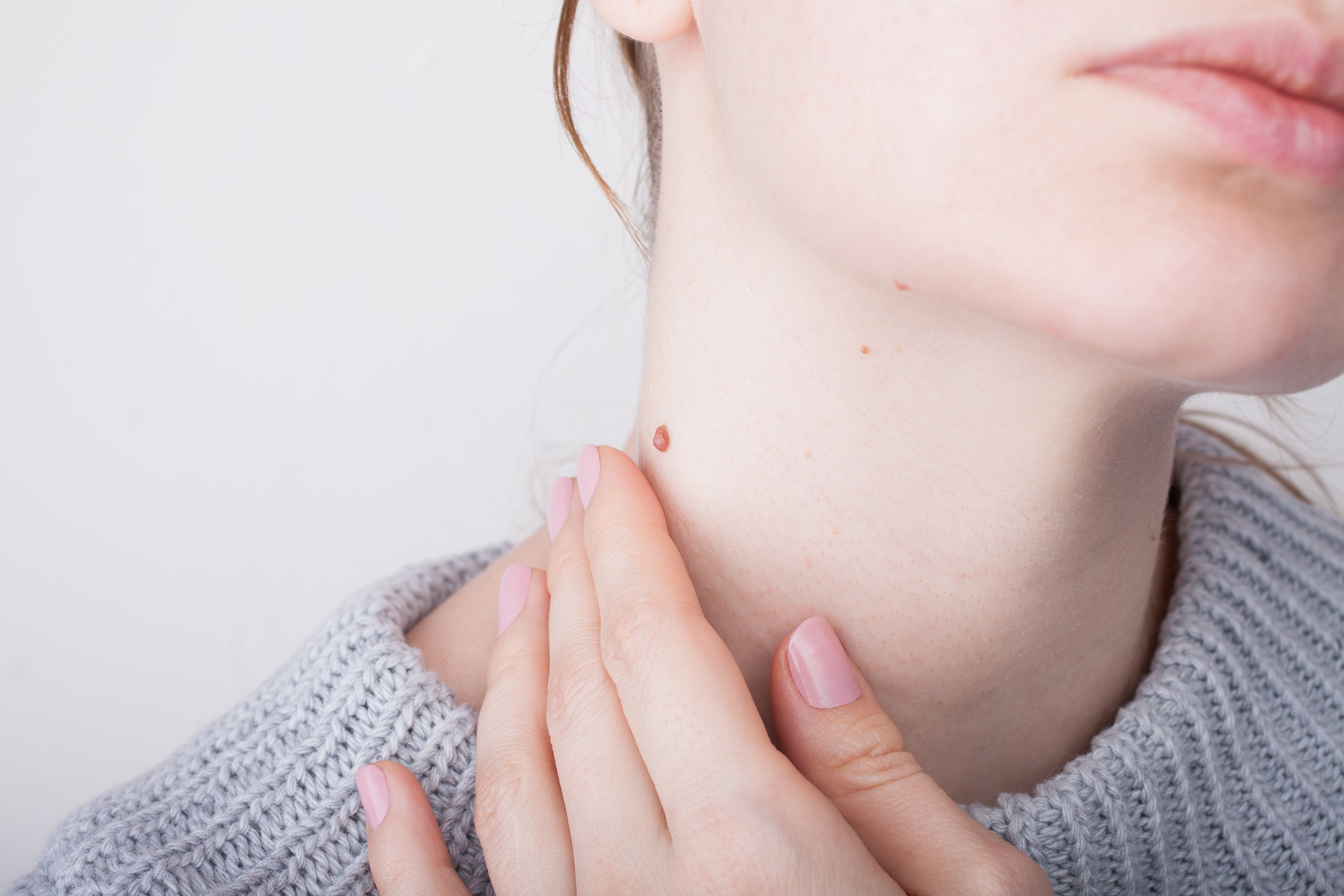
Skin cancer is one of the most common types of cancer, and basal cell carcinoma and squamous cell carcinoma are two of the most frequently diagnosed forms. While both often develop in areas exposed to the sun, they can look different, behave differently, and require different treatment approaches. Understanding the signs can help you know when it is time to schedule a dermatology evaluation.
What Is Basal Cell Carcinoma?
Basal cell carcinoma, often called BCC, begins in the basal cells of the skin. It is usually slow-growing and commonly appears on sun-exposed areas such as the face, ears, neck, scalp, shoulders, and arms.
Basal cell carcinoma may look like:
- A pearly or shiny bump
- A pink, red, or flesh-colored patch
- A sore that heals and returns
- A flat, scar-like area
- A bleeding or crusting spot that does not go away
Although basal cell carcinoma is less likely to spread to other parts of the body, it can grow deeper into surrounding skin and tissue if left untreated. Treatment may include surgical removal, topical medication, curettage and electrodesiccation, or other dermatologic procedures depending on the size, depth, and location of the lesion.
What Is Squamous Cell Carcinoma?
Squamous cell carcinoma, or SCC, begins in the squamous cells found in the outer layer of the skin. It is also strongly linked to sun exposure, but it can appear on areas that have had chronic irritation, injury, or inflammation.
Squamous cell carcinoma may look like a firm red bump, a scaly patch, a rough or crusted growth, or an open sore that does not heal. Some lesions may feel tender, bleed easily, or grow more quickly than expected.
Compared to basal cell carcinoma, squamous cell carcinoma has a higher risk of spreading, especially when it is large, deep, located on sensitive areas, or left untreated. Treatment often involves removing the cancerous tissue through excision, Mohs surgery, curettage and electrodesiccation, or another approach recommended by your dermatologist.
The Importance of Catching Skin Cancer Early
Early detection is important because skin cancer is often easier to treat when it is found in its earliest stages. A spot that seems small or harmless can still require professional evaluation, especially if it is changing, bleeding, itching, scabbing, or not healing.
Regular skin checks can help identify suspicious growths before they become more serious. During an exam, our dermatologist can evaluate unusual moles, lesions, sun damage, and areas of concern. If needed, a biopsy may be performed to confirm whether a spot is cancerous and determine the most appropriate treatment.
When to See a Dermatologist
You should schedule a skin exam if you notice a new growth, a sore that does not heal, a scaly or bleeding spot, or any skin change that looks unusual for you. It is also important to have routine skin checks if you have a history of skin cancer, frequent sun exposure, tanning bed use, fair skin, or a family history of skin cancer.
Schedule a skin evaluation with Green Dermatology & Cosmetic Center for early detection and personalized care for basal cell and squamous cell carcinoma. Visit our office in Deerfield Beach, Florida, or call (954) 799-9600 to book an appointment today.
Shop Our Products


© 2026 Green Dermatology & Cosmetic Center. All Rights Reserved | Accessibility Statement | Privacy Policy | Sitemap
Powered by: